



Selective Laser Sintering (SLS)
Why use Qisiyin for 3D printing?


Instant quotation
Upload your 3D file to receive real-time pricing and manufacturability feedback through our digital quotation platform

Quality assurance
We have obtained international certifications such as ISO9001, ISO14001, IATF16949, and ISO27001 for several consecutive years. The establishment and application of the 6S management system provide strong guarantees for the quality of your products.

Online tracking and management of orders
Through the company's self-developed ERP and MES systems, we have established a comprehensive management mechanism to achieve refined production. We can monitor project progress in real-time, ensuring that everything is traceable and safeguarding your project.

345mm*345mm*420mm
Maximum build size
±0.2-0.3mm/100mm
Machining accuracy
3 day
Standard delivery time
SLS printing service
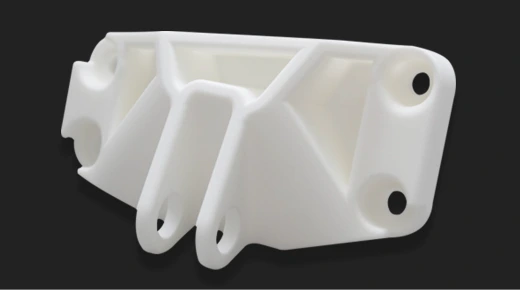
Selective Laser Sintering (SLS)
Selective laser sintering (SLS) is an industrial 3D printing technology that uses powder materials such as nylon to manufacture precise and durable parts. Similar to other 3D printing technologies, an infrared laser beam, under computer control, selectively sinters layers based on cross-sectional information. After one layer is completed, the next layer is sintered. Once all layers are sintered, excess powder is removed to obtain a sintered part.

Advantages of SLS Printing

Wide range of printing materials
Its high precision, wide range of materials, and short production cycle make it highly favored in industrial production and processing.

Processing complex geometric shapes
3D printing technology breaks through traditional limitations, enabling integrated design and manufacturing. Complex geometric shapes can be constructed more easily without increasing costs.

Ideal for functional parts and prototypes
3D printing technology can produce functional end-use parts according to requirements, thereby improving project progress.

Short production cycle, quick and cheap
Compared with traditional mold processing methods, 3D printing technology can produce directly without the need for mold making, saving the time of mold making and significantly improving production efficiency.

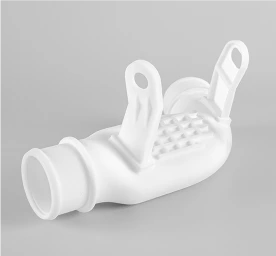
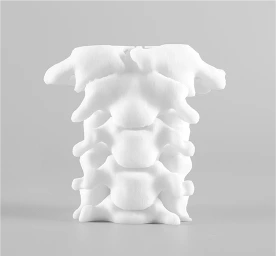
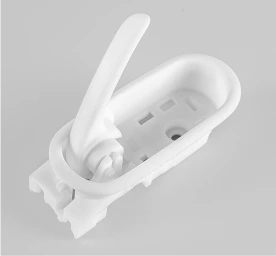
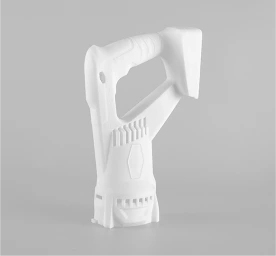
SLS
3D Printing
Applications of SLS 3D Printing
Due to the superior properties of its materials, SLS is an excellent choice for prototype manufacturing and small-batch production. SLS parts are increasingly used not only for prototypes but also for high-volume production applications across many industries. SLS produces high-precision and high-performance parts and can print parts with complex geometries.
SLS 3D Printing Tips
SLS is an innovative and efficient processing method that offers a wide range of possibilities for prototype making and small-batch production. You can make virtually unlimited modifications to your design, hollowing out thicker areas without affecting appearance or usability, which helps keep costs down and effectively reduces product weight. However, it's important to note that overflow holes should be provided for any uncured material inside the cavities.
3D Printing Materials
- 1
3DPrinting Post-processing
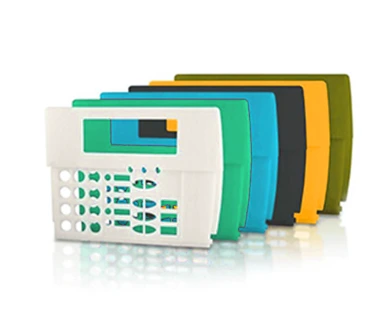
Spray paint
Painting the surface of parts can improve their aesthetic appearance and enhance brand awareness among consumers. Furthermore, painting may provide a protective effect on the parts.
View more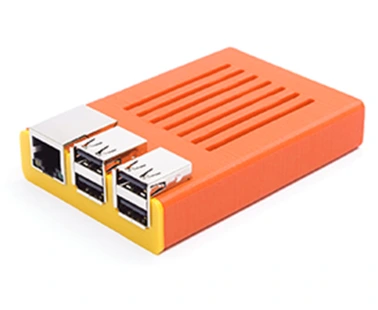
Polish
The process of creating a smooth and glossy surface through physical friction or chemical interference of parts produces a surface with significant specular reflection, but diffuse reflection can be reduced in certain materials.
View more
Sandblasting
It gives the surface of the part a smooth yet textured finish, primarily for visual applications, after which other surface treatments can be applied.
View more