


3D Printing for Rapid Prototyping: Process, Benefits and Applications
3D printing is widely used for rapid prototyping because it allows engineers and product designers to turn digital models into physical parts without conventional tooling. It helps teams evaluate product designs, test component fit, and identify potential problems before moving to more expensive manufacturing stages.
The best 3D printing method depends on the prototype’s purpose, material requirements, geometry, surface finish, and budget.
What Is 3D Printing Rapid Prototyping?
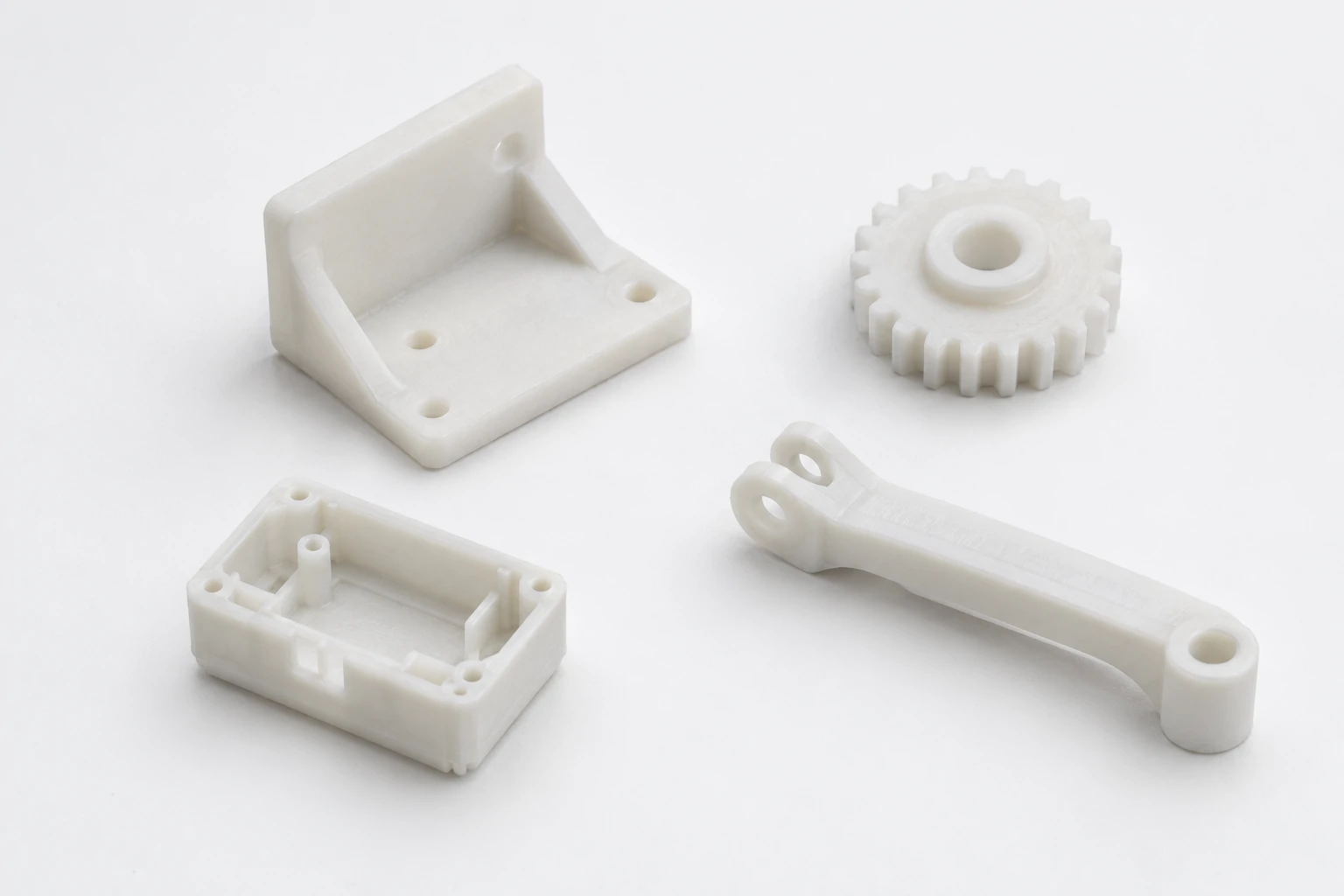
3D printing rapid prototyping is the process of creating physical prototypes directly from digital 3D models by building parts layer by layer. Unlike traditional manufacturing methods that may require dedicated molds or tooling, many 3D printing processes can produce prototypes with minimal setup.
This makes 3D printing useful during early product development, when designs may change frequently and several iterations are needed.
What Are the Benefits of 3D Printing for Rapid Prototyping?
The main benefits include:
Shorter development cycles: Parts can often be produced without waiting for dedicated tooling.
Design flexibility: Complex shapes, internal channels, and customized geometries can be produced with suitable printing technologies.
Lower initial investment: Prototypes can be made without the upfront cost of injection molding tools.
Faster design iteration: Engineers can revise a CAD model and print an updated version for evaluation.
Reduced material waste in many applications: Additive manufacturing builds parts from material rather than removing large amounts from a solid block, although supports and failed prints can still create waste.
However, 3D printing is not always the cheapest option. For larger quantities, CNC machining, injection molding, or other production methods may be more suitable depending on the part and material.
Which 3D Printing Technology Is Best for Rapid Prototyping?
Different technologies serve different prototype requirements.
Technology | Best suited for | Key consideration |
|---|---|---|
Basic functional models, fixtures, and larger parts | Visible layer lines and direction-dependent properties | |
Detailed models, smooth surfaces, and visual prototypes | Resin properties and post-curing requirements | |
Complex polymer parts and functional prototypes | Surface texture and finishing requirements | |
Polymer prototypes and small-batch functional parts | Material availability and application-specific performance | |
Complex metal prototypes and specialized components | Higher cost and additional post-processing may be required |
There is no single best process for every project. For example, SLA is often suitable for appearance models, while SLS or MJF may be preferable for certain functional polymer parts. Metal additive manufacturing is useful when a prototype requires a suitable metal alloy and complex geometry.
What Materials Can Be Used for 3D Printed Prototypes?
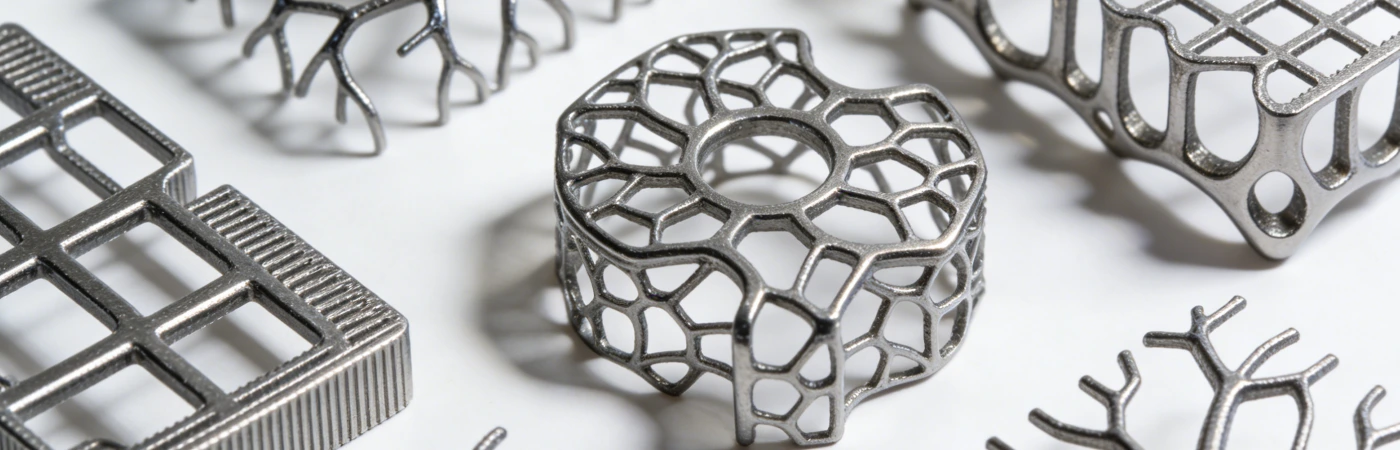
Material selection should reflect how the prototype will be used.
PLA: Often used for basic concept models and visual checks.
ABS-like materials: Used in selected applications requiring more impact resistance or functional evaluation, depending on the specific printing process and material grade.
Nylon (PA): Commonly used for functional polymer parts that require toughness or wear resistance.
Photopolymer resins: Available in different formulations for detail, appearance, flexibility, or selected mechanical properties.
Metal alloys: Used for prototypes that require metal-specific properties and are compatible with the chosen additive process.
A 3D printed part does not automatically behave like an injection-molded or machined component made from a similarly named material. Always verify the actual material grade, manufacturing process, and test conditions when mechanical performance matters.
When Should You Use 3D Printing for Rapid Prototyping?
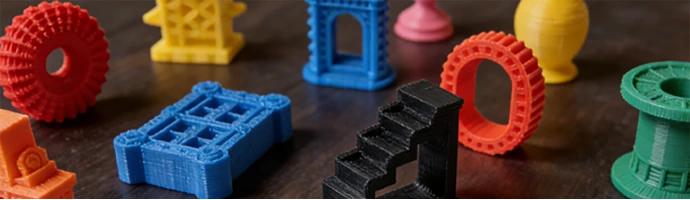
3D printing is particularly useful when:
You need to check a product’s shape, appearance, or ergonomics.
You want to verify assembly and component fit before production.
The design contains complex geometry that is difficult or expensive to manufacture conventionally.
You need to test multiple design versions quickly.
You need a small number of prototypes before committing to production tooling.
For tight dimensional tolerances, demanding surface finishes, or testing with production-grade materials, CNC machining may be a better option. If the main goal is to evaluate the behavior of an injection-molded part, prototype tooling or injection molding may provide a more representative result.
How to Choose the Right Rapid Prototyping Process
Start by identifying what the prototype needs to prove:
Appearance: Consider SLA or another process capable of producing the required visual quality.
Fit and assembly: Choose a process that can meet the critical dimensions and feature requirements.
Functional performance: Select the material and manufacturing process based on the expected loads, temperature, wear, and environment.
Production readiness: Consider CNC machining, prototype injection molding, or another production-representative method if the prototype must closely reflect the final part.
Before requesting a quote, prepare a 3D CAD file, quantity, material preference, critical dimensions, surface finish requirements, and intended application. This information helps a manufacturer recommend a suitable process and provide a more accurate estimate.
FAQs
Is 3D printing good for rapid prototyping?
Yes. 3D printing is well suited to rapid prototyping because it can produce physical parts directly from digital models without conventional production tooling. It is especially useful for design validation and iterative development.
How fast can a 3D printed prototype be made?
Some simple prototypes can be printed within hours, while larger, more complex, or higher-detail parts may take several days, including post-processing. Actual lead time depends on geometry, technology, material, quantity, and finishing requirements.
Is 3D printing cheaper than CNC machining for prototypes?
It depends on the part. 3D printing can be cost-effective for complex shapes and low quantities, while CNC machining may be more suitable for certain metal parts, tighter tolerances, or production-grade materials. Comparing both methods using the same design requirements is the best way to evaluate cost.
Can 3D printed prototypes be used for functional testing?
Yes, provided the chosen process and material are appropriate for the test. Engineers should account for material properties, build orientation, layer adhesion, post-processing, and environmental conditions when interpreting test results.
Conclusion
3D printing rapid prototyping helps product development teams evaluate designs, identify problems, and refine components before committing to production. Selecting the right process requires balancing geometry, material properties, dimensional requirements, surface finish, lead time, and cost.
The most effective approach is to choose the manufacturing method based on what the prototype needs to validate—not simply on which process is fastest.