China Injection Molding Manufacturer: A Complete Guide for Global Buyers
For companies developing plastic products, choosing the right China injection molding manufacturer can have a significant impact on product quality, tooling costs, production efficiency, and long-term supply chain performance.
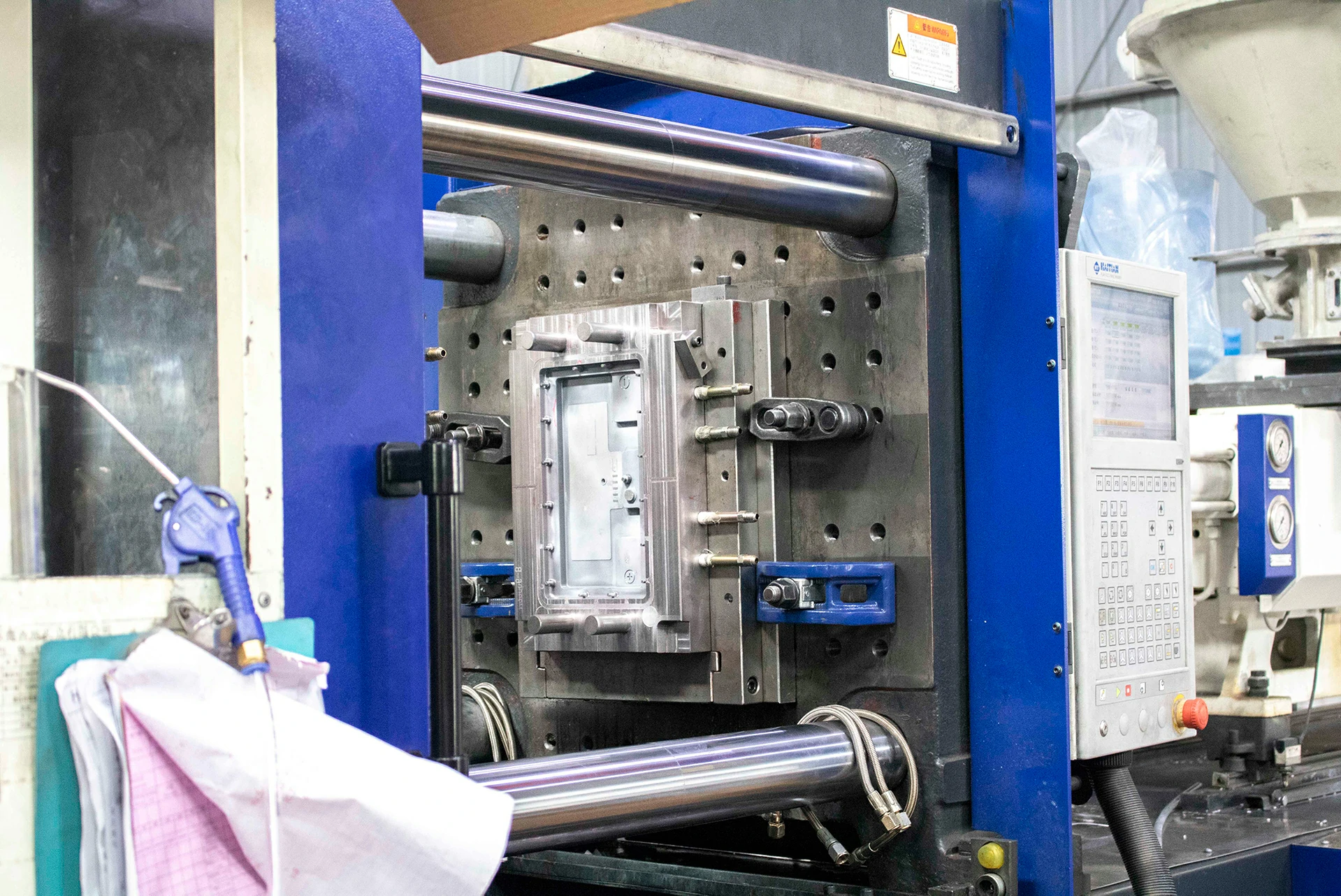
China has become an important manufacturing destination for plastic injection molding because suppliers can support a wide range of services, from mold design and tooling to injection molding, secondary processing, assembly, and mass production.
However, choosing a supplier should involve more than comparing quotations. A reliable injection molding manufacturer needs to understand your product requirements, material selection, mold design, dimensional tolerances, quality standards, production volume, and delivery expectations.
For global buyers, the goal is not simply to find the lowest-cost injection molding supplier in China. The goal is to find a manufacturing partner that can consistently deliver the required quality at a competitive total cost.
This guide explains what global buyers should know when sourcing custom injection molding in China, including manufacturing capabilities, materials, tooling, DFM, quality control, costs, lead times, and supplier selection.
.webp)
What Is a China Injection Molding Manufacturer?
A China injection molding manufacturer is a manufacturing company based in China that produces plastic components using injection molding technology.
Depending on the supplier, services may include:
- Injection mold design
- Injection mold manufacturing
- Plastic injection molding
- Prototype development
- DFM analysis
- Material selection
- Insert molding
- Overmolding
- Secondary machining
- Surface finishing
- Assembly
- Quality inspection
- Packaging and logistics
Some suppliers specialize primarily in mold making, while others focus on injection molding production. More comprehensive manufacturers can integrate tooling and molding under one manufacturing process.
For international customers, working with an integrated supplier can simplify communication between mold design, tooling, production, and quality control.
Why Source Injection Molding from China?
The decision to manufacture plastic components in China is usually based on a combination of manufacturing capability, production scalability, tooling expertise, and overall cost.
Competitive Manufacturing Costs
China has a large and mature manufacturing ecosystem covering plastics, tooling, machining, electronics, metal components, finishing, packaging, and assembly.
This supply-chain environment can help manufacturers provide competitive pricing, particularly for projects involving production tooling and medium- to high-volume injection molding.
However, the lowest initial quotation does not always represent the lowest total manufacturing cost.
Global buyers should evaluate:
- Mold cost
- Material cost
- Injection molding cost
- Secondary processing
- Inspection
- Packaging
- Shipping
- Tool maintenance
- Potential tooling modifications
A slightly higher initial quotation can sometimes provide better long-term value if it reduces quality issues, tooling problems, or production delays.
Extensive Manufacturing Experience
China has a broad manufacturing ecosystem supporting industries such as automotive, electronics, consumer products, medical devices, industrial equipment, robotics, and more.
This gives experienced injection molding suppliers exposure to a wide range of engineering plastics, mold structures, production requirements, and quality standards.
Tooling and Mold Manufacturing
The mold is one of the most important investments in an injection molding project.
An experienced supplier should be able to support the complete tooling process, including:
DFM → Mold Design → Mold Manufacturing → Mold Trial → Inspection → Production
Close coordination between mold manufacturing and injection molding can help identify potential issues earlier in the development process.
Production Scalability
Injection molding is particularly suitable for production runs where the initial tooling investment can be distributed across a larger number of components.
Once a mold has been validated, the same tooling can be used to produce repeatable components throughout the production program, subject to appropriate mold maintenance and process control.
.webp)
What Services Should a China Injection Molding Manufacturer Provide?
Before choosing an injection molding supplier, global buyers should understand the complete range of services available.
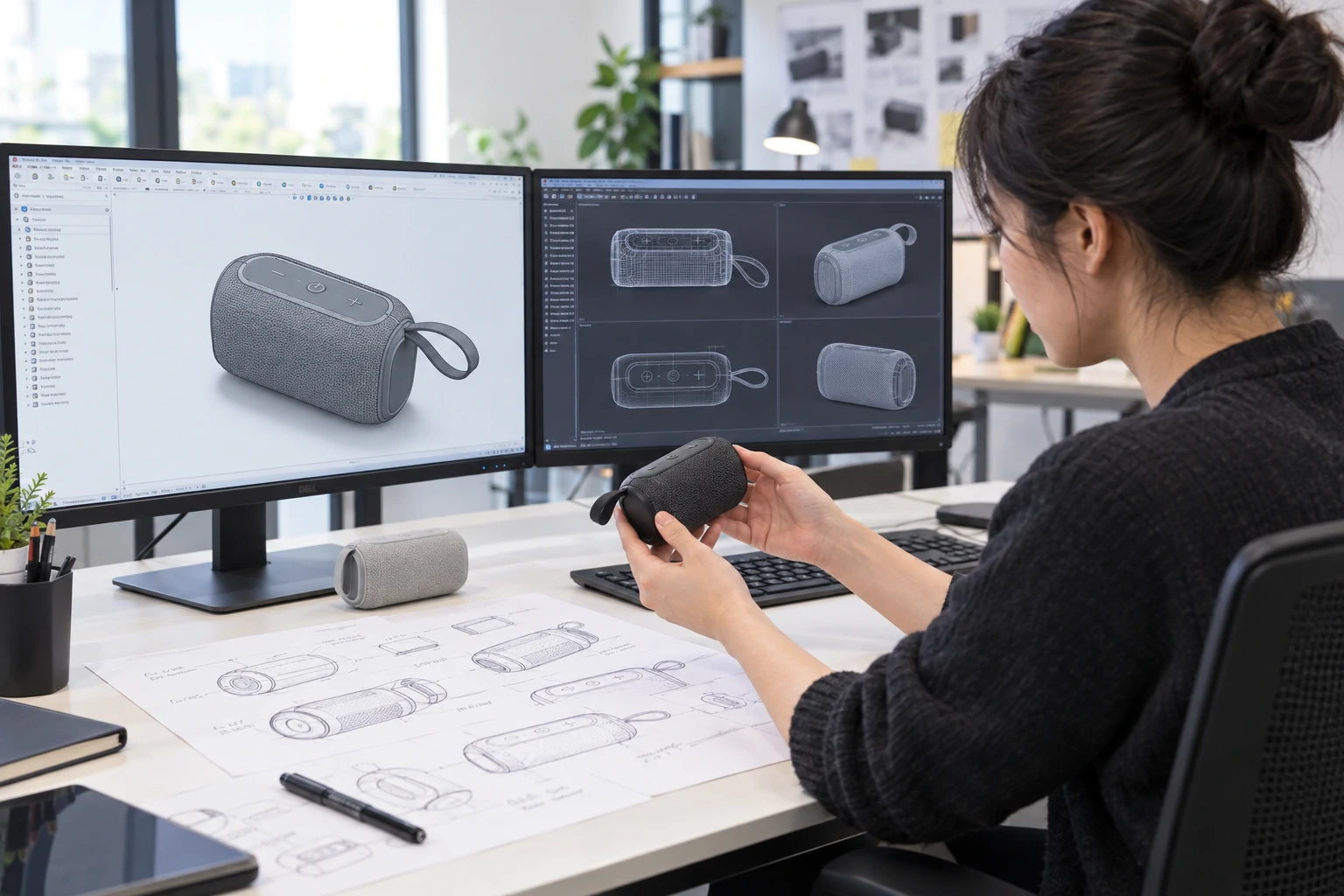
1. Design for Manufacturing (DFM)
DFM is one of the most valuable engineering services an injection molding supplier can provide.
Before mold manufacturing begins, engineers should review the product design for potential molding issues.
A typical DFM review may consider:
- Wall thickness
- Draft angles
- Ribs
- Bosses
- Undercuts
- Parting lines
- Gate locations
- Ejection
- Material shrinkage
- Tolerances
- Surface finish
- Mold complexity
Identifying these issues before tooling can reduce the risk of expensive mold modifications later.
2. Injection Mold Design
After the part design has been reviewed, the mold structure can be developed according to the geometry and production requirements.
Important mold design elements include:
- Mold base
- Core and cavity
- Runner system
- Gate design
- Cooling channels
- Ejection system
- Slides
- Lifters
- Inserts
- Parting surfaces
The mold design should be developed around the product geometry, material, expected production volume, cycle time, and required part quality.
3. Mold Manufacturing
Precision mold manufacturing typically involves processes such as:
- CNC machining
- EDM
- Wire EDM
- Grinding
- Drilling
- Polishing
- Mold fitting
- Mold assembly
The manufacturing process depends on the mold structure, steel selection, tolerances, surface finish, and production requirements.
4. Injection Molding
Once the mold has been completed and validated, plastic material can be processed through an injection molding machine.
Important production parameters include:
- Injection pressure
- Injection speed
- Melt temperature
- Mold temperature
- Holding pressure
- Cooling time
- Cycle time
Process parameters should be optimized according to the selected material, part geometry, mold design, and machine capability.
5. Secondary Operations
Depending on the project, injection molded parts may require additional operations such as:
- Trimming
- Drilling
- CNC machining
- Heat staking
- Ultrasonic welding
- Printing
- Laser marking
- Surface finishing
- Insert installation
- Assembly
Having these processes coordinated through one supplier can simplify production management.
Common Injection Molding Materials
One of the first technical decisions in an injection molding project is material selection.
Different plastics provide different combinations of strength, stiffness, flexibility, impact resistance, chemical resistance, temperature resistance, appearance, and cost.
ABS
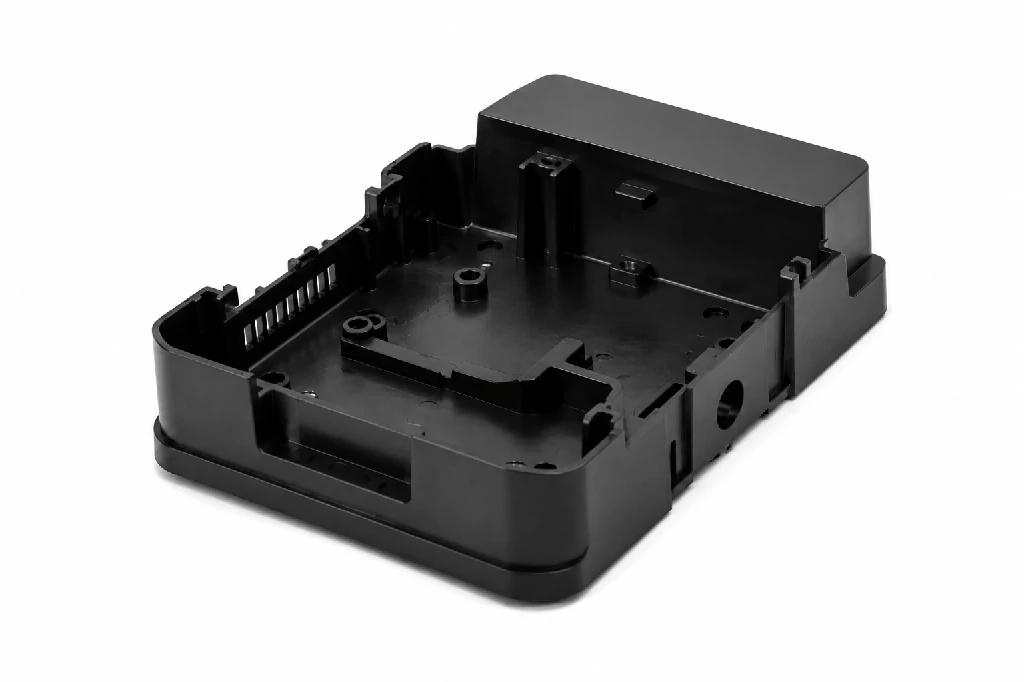
ABS is commonly used for housings, consumer products, automotive components, and industrial enclosures.
It provides a useful combination of impact resistance, dimensional stability, appearance, and processability.
Polypropylene (PP)
PP is lightweight and offers good chemical resistance and fatigue performance.
It is commonly used for:
- Automotive components
- Containers
- Household products
- Packaging
- Living-hinge applications
Polycarbonate (PC)
PC provides high impact resistance and is available in grades suitable for transparent or engineering applications.
It can be used for:
- Protective covers
- Electronic housings
- Industrial components
- Safety-related products
Nylon (PA)
Nylon is valued for its mechanical strength, wear resistance, and suitability for engineering applications.
It is frequently used for:
- Gears
- Bushings
- Mechanical components
- Automotive components
- Industrial parts
POM
POM provides good dimensional stability, low friction, and wear resistance.
It is often selected for precision mechanical components such as gears, bushings, bearings, and moving parts.
PEEK
PEEK is a high-performance engineering thermoplastic used for demanding applications where high temperature performance, chemical resistance, and mechanical properties are important.
TPU
TPU and other thermoplastic elastomers can be used when flexibility, elasticity, impact absorption, or soft-touch characteristics are required.
The appropriate material should always be selected according to the actual operating environment and functional requirements of the product.
Injection Molding Design Considerations
A good injection molding manufacturer should not only manufacture the part but also help identify potential design issues before production.
Wall Thickness
Consistent wall thickness can help promote more uniform filling and cooling.
Significant variations can increase the risk of:
- Sink marks
- Warpage
- Voids
- Uneven shrinkage
- Longer cooling cycles
Draft Angles
Draft angles help the finished part separate from the mold during ejection.
Insufficient draft can increase the risk of scratches, deformation, or ejection problems.
Ribs and Bosses
Ribs can increase structural stiffness without requiring excessively thick walls.
Bosses can provide mounting points for screws, inserts, and other fastening components.
Both features should be designed carefully to avoid excessive material accumulation and potential sink marks.
Undercuts
Undercuts can make mold construction and part ejection more complicated.
Depending on the geometry, additional mechanisms such as slides or lifters may be required.
Whenever possible, unnecessary undercuts should be eliminated or simplified.
Gate and Parting Line
Gate location and parting-line placement can affect filling behavior, appearance, weld lines, ejection, and dimensional performance.
These features should therefore be considered during the initial DFM stage rather than after the mold has already been manufactured.
Injection Molding Tolerances and Quality
Global buyers often ask:
What tolerance can a China injection molding manufacturer achieve?
There is no single tolerance value that applies to every injection molded part.
Achievable tolerances depend on:
- Material
- Part size
- Geometry
- Mold construction
- Shrinkage
- Processing conditions
- Cooling
- Tooling accuracy
- Inspection methods
Critical dimensions should therefore be identified separately from non-critical dimensions.
For example, a mounting interface, bearing seat, connector interface, or sealing surface may require tighter control than a cosmetic exterior surface.
Instead of specifying extremely tight tolerances for every dimension, a better approach is to identify the functional requirements and work with the manufacturer to establish realistic tolerances.
Quality Control at a China Injection Molding Manufacturer
Quality control should be considered throughout the entire manufacturing process rather than only at final inspection.
A comprehensive quality process may include:
Incoming Material Inspection
The manufacturer should verify material information and specifications according to project requirements.
Mold Inspection
Critical mold dimensions and features should be checked before production.
First Article Inspection
Initial molded parts can be inspected against the approved drawings, CAD model, specifications, and agreed quality requirements.
In-Process Inspection
Production inspection can help identify dimensional or visual problems before a large quantity of parts is completed.
Final Inspection
Finished parts can be checked for:
- Dimensions
- Appearance
- Surface defects
- Critical features
- Assembly interfaces
- Functional requirements
Depending on customer requirements, inspection documentation may include dimensional reports, material documentation, first article reports, or other quality records.
Certifications and Quality Standards
For global buyers, certifications can be an important part of supplier evaluation.
Depending on the industry and customer requirements, buyers may look for quality-management certifications and industry-specific compliance documentation.
However, certifications should not be treated as the only measure of manufacturing capability.
A supplier evaluation should also consider:
- Actual production capabilities
- Quality-control procedures
- Inspection equipment
- Engineering experience
- Manufacturing history
- Process control
- Communication
- Traceability
If a project requires specific certifications or compliance standards, these requirements should be confirmed with the supplier before production begins.
How Much Does Injection Molding Cost in China?
The cost of injection molding in China depends on several variables.
The major cost factors include:
Mold Cost
Mold cost is influenced by:
- Part size
- Mold complexity
- Number of cavities
- Mold steel
- Surface finish
- Slides and lifters
- Hot runner or cold runner configuration
- Expected mold life
Material Cost
Different plastics have significantly different material costs.
Commodity materials such as PP may have very different costs compared with engineering plastics such as PEEK or specialized reinforced grades.
Production Volume
Production volume has a major influence on the economics of injection molding.
A larger production quantity can spread the initial tooling investment across more parts.
Part Complexity
Complex parts may require additional mold mechanisms, longer machining times, more sophisticated tooling, or additional secondary operations.
Secondary Processing
Painting, printing, laser marking, assembly, welding, insert installation, and other post-molding operations can increase the overall unit cost.
For this reason, buyers should compare the total landed cost rather than looking only at the injection molding unit price.
Injection Molding Lead Time in China
The total lead time for an injection molding project typically includes several stages:
DFM → Mold Design → Mold Manufacturing → Mold Trial → Sample Inspection → Mold Modification → Production
The actual timeline depends on factors such as:
- Part complexity
- Mold size
- Mold steel
- Number of cavities
- Mold mechanisms
- Surface finish
- Material
- Sample approval
- Required production volume
A simple mold may require significantly less development time than a complex multi-slide or multi-cavity production mold.
Global buyers should therefore ask suppliers to provide a clear project schedule rather than relying on a single estimated delivery date.
How to Choose a Reliable China Injection Molding Manufacturer
Choosing the right supplier is one of the most important decisions in the project.
Here are several factors global buyers should evaluate.
1. Manufacturing Capabilities
Review the supplier's actual injection molding machines, mold-making capabilities, production capacity, and available secondary processes.
2. Engineering Support
A supplier should be capable of reviewing your CAD files and drawings and providing useful DFM feedback before tooling begins.
3. Material Experience
Make sure the manufacturer has experience with the material and grade required for your application.
4. Tooling Capability
Ask whether molds are manufactured internally or outsourced, and understand how mold design, manufacturing, trial runs, and modifications are managed.
5. Quality Control
Evaluate the supplier's inspection processes, measurement equipment, documentation, and approach to critical dimensions.
6. Production Capacity
Make sure the supplier can support both your current production volume and potential future demand.
7. Communication
For international projects, communication is an important part of supplier performance.
The supplier should be able to communicate clearly about:
- Technical requirements
- DFM feedback
- Tooling progress
- Sample approval
- Production status
- Quality issues
- Shipping
8. Total Cost
Do not compare suppliers based only on the initial quotation.
Consider:
Tooling + Parts + Secondary Operations + Inspection + Packaging + Shipping + Potential Rework
This provides a more realistic view of the project's total cost.
China Injection Molding for Global OEM Buyers
For OEM companies, the relationship with an injection molding manufacturer often extends beyond a single production order.
An experienced supplier may support the product throughout different stages:
Prototype → DFM → Tooling → T1 Samples → Design Validation → Production → Assembly → Repeat Orders
This can be particularly valuable when product designs change during development.
A supplier that understands the complete manufacturing process can help identify potential issues before they become expensive production problems.
Injection Molding Applications
China injection molding manufacturers support a wide range of industries.
Automotive
Applications include:
- Interior components
- Exterior components
- Sensor housings
- Electrical components
- Clips and fasteners
- Functional plastic components
Electronics
Injection molding is commonly used for:
- Device housings
- Connector components
- Switches
- Sensor housings
- Internal structural components
Medical
Plastic injection molding can support various medical and healthcare components where material selection, dimensional control, cleanliness, and quality requirements are appropriate to the application.
Robotics
Robotics applications may include:
- Sensor housings
- Robot covers
- Cable-management components
- Mechanical components
- End-effector components
Consumer Products
Injection molding is widely used for:
- Appliances
- Household products
- Consumer electronics
- Sporting goods
- Personal products
- Packaging components
Industrial Equipment
Industrial applications can include:
- Equipment housings
- Mechanical components
- Covers
- Handles
- Mounting components
- Protective enclosures
Insert Molding and Overmolding
A capable China injection molding manufacturer may also support more advanced molding processes.
Insert Molding
Insert molding combines plastic with pre-formed components such as metal inserts.
It can be useful for:
- Threaded inserts
- Electrical contacts
- Bushings
- Reinforcement components
Overmolding
Overmolding combines different materials or materials with different functional characteristics within a single component.
For example, a rigid plastic structure can be combined with a softer elastomer to create a component with both structural strength and improved grip.
These processes can reduce assembly operations and allow additional functionality to be integrated into the molded component.
Why Work With QSY for Injection Molding?
QSY provides custom manufacturing solutions for customers that require plastic injection molding, tooling, and related manufacturing services.
Our approach focuses on supporting customers from the early design stage through production.
Depending on project requirements, our injection molding service can include:
- DFM analysis
- Injection mold development
- Plastic injection molding
- Material selection
- Insert molding
- Overmolding
- Secondary processing
- Surface finishing
- Assembly
- Quality inspection
When reviewing a new project, our engineering team can evaluate the 3D CAD model, technical drawings, materials, tolerances, surface requirements, and expected production volume.
This allows potential manufacturing issues to be identified before tooling and production begin.
For global customers, the objective is to provide a streamlined manufacturing process that connects engineering, tooling, molding, quality control, and production.
What Should You Send to a China Injection Molding Manufacturer for a Quote?
To receive a more accurate quotation, global buyers should provide as much technical information as possible.
Recommended information includes:
- 3D CAD files
- 2D technical drawings
- Material and material grade
- Surface finish requirements
- Critical dimensions and tolerances
- Expected annual or project volume
- Required production quantity
- Color requirements
- Assembly requirements
- Packaging requirements
- Target delivery schedule
Providing complete information allows the manufacturer to evaluate tooling complexity, material requirements, production processes, inspection requirements, and logistics more accurately.
Choosing a China injection molding manufacturer is not simply a decision about where to produce plastic parts. It is a decision about tooling capability, engineering support, quality control, production scalability, communication, and long-term manufacturing reliability.
China can provide a broad manufacturing ecosystem for companies looking for custom injection molding, mold making, and production services. However, global buyers should evaluate suppliers based on their actual capabilities rather than relying solely on price.
A reliable supplier should be able to support the complete process:
Design → DFM → Mold Making → Injection Molding → Inspection → Secondary Processing → Assembly → Delivery
For OEMs, product developers, engineering companies, and procurement teams, establishing the right manufacturing partnership early in the project can help reduce tooling risks, improve product quality, and create a more predictable production process.
If you are looking for a China injection molding manufacturer for your next project, send QSY your CAD files, drawings, material requirements, tolerances, and production volume. Our engineering team can review your project and provide a suitable manufacturing solution and quotation.