


Custom Metal Parts Manufacturing for Mass Production: A Supplier Guide
Custom metal parts manufacturers produce a wide range of metal components in large volumes, based on drawings, material specifications, and quality requirements provided by their clients. These suppliers support original equipment manufacturers (OEMs), industrial equipment makers, automotive companies, and various other organizations that require a steady supply of parts for their ongoing production processes.
Choosing the right supplier involves more than finding a competitive unit price. Manufacturing capabilities, process selection, material quality, dimensional consistency, and production management all affect the success of a long-term supply relationship.

What Does a Custom Metal Parts Mass Production Supplier Do?
A custom metal parts supplier produces components based on customer-specific designs rather than standard off-the-shelf products.
Depending on the part geometry, material, required quantity, and application, manufacturing may involve:
CNC machining: Producing precision components through milling, turning, drilling, and other machining operations.
Metal stamping: Manufacturing sheet metal components through punching, forming, and pressing, especially for repeat production.
Die casting: Producing metal components with complex shapes using molten metal injected into a mold.
Sheet metal fabrication: Manufacturing enclosures, brackets, panels, and structural components through cutting, bending, welding, and assembly.
Metal injection molding (MIM): Producing certain small, complex metal components in higher quantities using a powder-based molding process.
Not every process is suitable for every part. A supplier should evaluate the design and expected production volume before recommending a manufacturing method.
Which Manufacturing Process Is Best for Mass Production?
The right process depends on part complexity, material, dimensional requirements, and order volume.
Manufacturing process | Typical applications | Key consideration |
|---|---|---|
CNC machining | Precision housings, shafts, brackets, and mechanical parts | Flexible for different designs and materials |
Metal stamping | Sheet metal brackets, clips, and structural components | Tooling investment can be offset by repeat production |
Die casting | Aluminum or zinc housings and complex metal components | Suitable for repeat production of compatible geometries |
Sheet metal fabrication | Cabinets, panels, frames, and enclosures | Suitable for formed sheet metal products |
Metal injection molding | Small, complex metal components | Requires specialized tooling and process control |
For example, CNC machining may be appropriate for components with tight dimensional requirements or frequent design changes. Metal stamping can be more economical for high-volume sheet metal parts with stable designs. Die casting is often considered for repeat production of complex aluminum or zinc components.
The best process should balance tooling investment, unit cost, production speed, and required part performance.
What Materials Are Used for Custom Metal Parts?
Material selection affects strength, weight, corrosion resistance, machinability, and total manufacturing cost.
Common materials include:
Aluminum: Lightweight and machinable, commonly used for housings, brackets, and structural components.
Stainless steel: Offers corrosion resistance and strength for industrial and mechanical applications.
Carbon steel: Used for structural components, machine parts, and applications requiring strength.
Brass: Commonly used for fittings, connectors, and electrical components.
Copper: Selected for applications requiring electrical or thermal conductivity.
The appropriate grade depends on the component's operating environment and functional requirements. Buyers should provide material specifications rather than relying on general material names alone.
How to Choose a Reliable Mass Production Supplier
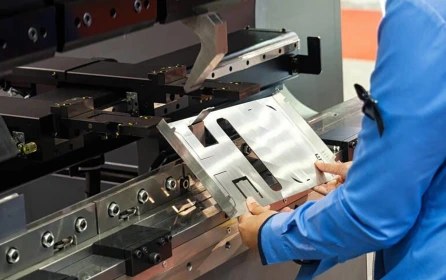
When evaluating a custom metal parts manufacturer, consider these five factors.
1. Production Capacity and Equipment
Confirm whether the supplier has suitable equipment, production capacity, and process experience for your expected order volume. Ask how production schedules are managed when repeat orders or demand fluctuations occur.
2. Quality Control and Consistency
Mass production requires more than producing one acceptable sample. The supplier should have defined inspection procedures, control critical dimensions, manage process variations, and maintain records where required.
For projects with strict specifications, discuss first-article inspection, in-process inspection, final inspection, and material traceability before production begins.
3. Engineering and Design Support
A capable supplier should review drawings and identify potential manufacturing problems before production. Design for manufacturability (DFM) reviews can help reduce unnecessary machining operations, simplify tooling, and improve production efficiency.
4. Secondary Processing and Finishing
Many metal parts require additional operations, such as anodizing, plating, powder coating, heat treatment, polishing, or assembly.
Working with a supplier that can coordinate multiple manufacturing and finishing processes may simplify project management. Confirm which operations are performed in-house and which are outsourced.
5. Long-Term Supply and Communication
For OEM projects, stable quality and reliable communication are essential. Discuss drawing revisions, production planning, lead times, packaging specifications, and procedures for handling quality issues.
A supplier should be able to explain how approved specifications are maintained across repeat orders.
What Affects the Cost of Mass-Produced Metal Parts?
The total cost of custom metal parts depends on several factors:
Cost factor | Impact on manufacturing cost |
|---|---|
Raw material | Material grade, size, and market price affect cost. |
Manufacturing process | Different processes have different tooling and production costs. |
Part complexity | Complex features may require additional operations or specialized tooling. |
Production quantity | Higher quantities may reduce the unit cost by spreading setup and tooling expenses. |
Tolerances | Tight tolerances can increase machining and inspection requirements. |
Surface finishing | Additional treatments add processing steps and cost. |
Tooling | Stamping dies and casting molds require upfront investment. |
When requesting quotations, provide a 3D CAD file, 2D engineering drawings, material requirements, expected annual volume, order quantity, surface finish, and critical tolerances.
For a meaningful comparison, make sure each supplier quotes against the same technical specifications and production assumptions.
How to Move from Prototypes to Mass Production

A successful mass production project usually follows several stages:
Design review: Evaluate geometry, materials, tolerances, and manufacturing feasibility.
Process selection: Choose the appropriate manufacturing method based on volume and part requirements.
Prototype or sample production: Verify dimensions, fit, function, and appearance.
Tooling and process preparation: Develop required tooling and establish production parameters.
Production validation: Confirm that the manufacturing process can consistently meet the approved specifications.
Mass production: Manufacture parts with ongoing quality checks and production monitoring.
Validating the design and manufacturing process before large-scale production helps reduce the risk of costly changes later.
Which Industries Need Custom Metal Parts in Mass Production?
Custom metal components are used across many industries:
Automotive: Brackets, housings, shafts, fasteners, and mechanical components.
Industrial equipment: Machine parts, mounting components, connectors, and structural elements.
Robotics and automation: Frames, joints, precision brackets, and mechanical interfaces.
Electronics: Enclosures, heat sinks, connectors, and mounting hardware.
Consumer products: Metal housings, structural components, and functional accessories.
Each application has different requirements for material, precision, durability, and production volume.
Frequently Asked Questions
How do I find a custom metal parts mass production supplier?
Look for manufacturers with relevant process capabilities, suitable production capacity, documented quality procedures, and experience with similar components. Compare quotations using identical specifications and evaluate their ability to support repeat orders.
Which manufacturing process is most cost-effective for mass production?
There is no universal answer. CNC machining, stamping, die casting, and other processes have different tooling investments and unit costs. The most economical option depends on part geometry, material, tolerances, and production volume.
Can a metal parts supplier support both prototyping and mass production?
Some suppliers offer prototype manufacturing, low-volume production, and larger production runs. Confirm that the supplier can support the transition between stages and maintain consistent specifications.
What information should I provide for a mass production quotation?
Provide 3D CAD files, 2D drawings, material grades, annual demand, order quantities, tolerances, surface finish requirements, and inspection specifications. These details help suppliers evaluate manufacturing feasibility and calculate costs.
Conclusion
Choosing a custom metal parts mass production supplier requires evaluating manufacturing capabilities, quality consistency, process suitability, and long-term supply support.
For OEM buyers, the right manufacturing partner should be able to produce components according to technical specifications, maintain quality across production batches, and support changing demand throughout the product lifecycle. A careful supplier evaluation before production begins can help reduce manufacturing risks and establish a more reliable supply chain.
If you are looking for a manufacturing partner for custom metal parts and other precision components, QSY Model is worth considering. QSY Model provides custom manufacturing services including CNC machining, sheet metal fabrication, die casting, and surface finishing, supporting projects from prototyping to production manufacturing. With a range of manufacturing processes and material options, QSY Model helps OEM customers source custom components through a coordinated manufacturing service.
Visit QSY Model to explore its manufacturing capabilities or contact the team to discuss your project requirements and request a quote.