


Injection Molding: Materials, Design, Tolerances and Applications
Injection molding is a highly efficient manufacturing process for producing plastic components with complex geometries, consistent dimensions, and repeatable quality. From automotive components and medical devices to consumer products and industrial equipment, injection molded parts are used across a wide range of industries.
However, producing a successful injection molded part requires more than simply injecting molten plastic into a mold. Material selection, part design, mold design, dimensional tolerances, surface finish, production volume, and application requirements all need to be considered before manufacturing begins.
In this guide, we explore the fundamentals of injection molding, including common materials, design considerations, achievable tolerances, and major applications.
What Is Injection Molding?
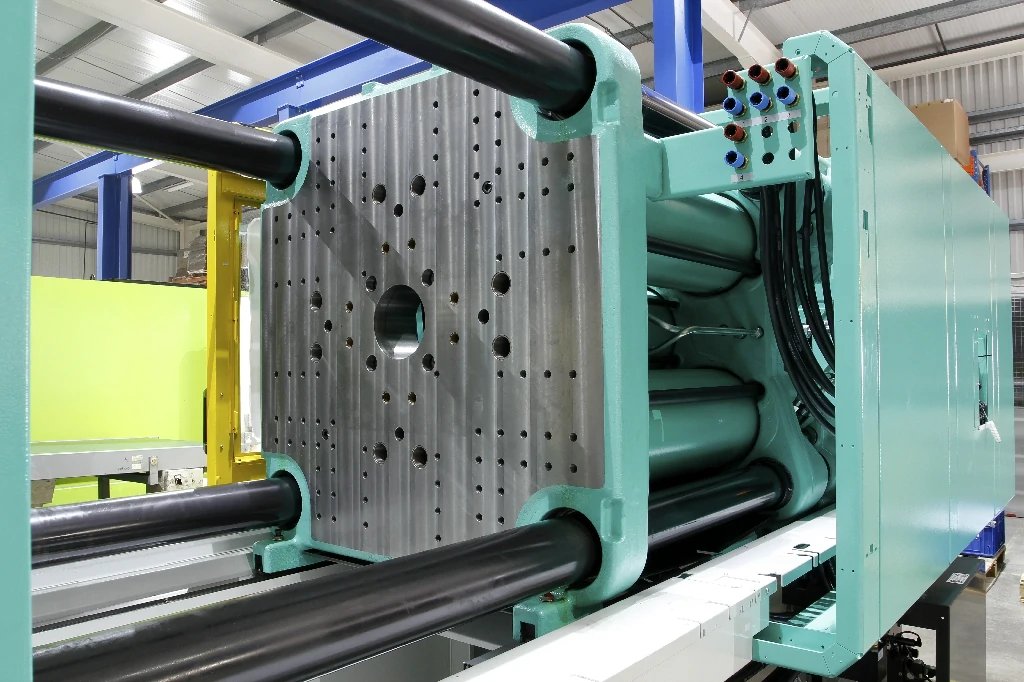
Injection molding is a manufacturing process that produces plastic parts by heating polymer materials until they become molten and then injecting the material into a mold cavity under pressure.
Once the material fills the cavity, it cools and solidifies into the desired shape. The mold then opens and the finished component is ejected.
A typical injection molding cycle includes several key stages:
- Material preparation – Plastic pellets are dried or prepared according to the material requirements.
- Melting – The polymer is heated inside the injection molding machine.
- Injection – Molten plastic is injected into the mold cavity under controlled pressure.
- Packing and holding – Additional pressure is applied to compensate for material shrinkage.
- Cooling – The plastic cools and solidifies inside the mold.
- Mold opening – The mold separates after the part has sufficiently cooled.
- Ejection – Ejector pins or other mechanisms remove the finished part.
After ejection, additional operations such as trimming, assembly, surface finishing, printing, or secondary machining may be performed depending on the product requirements.
Why Is Injection Molding Widely Used?
Injection molding is particularly suitable for medium- to high-volume production because the mold can produce large numbers of consistent parts once the tooling process has been completed.
Key advantages include:
- High production efficiency
- Excellent repeatability
- Complex part geometries
- Consistent dimensional quality
- Wide material selection
- Low unit cost at higher production volumes
- Integration of features into a single component
- Automated production possibilities
- Compatibility with many surface finishes and colors
Injection molding can also support processes such as insert molding, overmolding, and two-shot molding, allowing manufacturers to combine multiple materials or functional elements within a single component.
Injection Molding Materials
Material selection is one of the most important decisions in injection molding. Different plastics offer different combinations of strength, flexibility, chemical resistance, temperature resistance, impact resistance, appearance, and cost.
The right material depends on how and where the final component will be used.
ABS
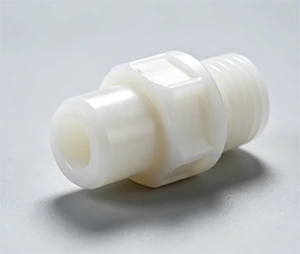
ABS is a widely used engineering thermoplastic known for its good impact resistance, dimensional stability, and relatively easy processing.
Common applications include:
- Consumer electronics housings
- Automotive interior components
- Appliances
- Industrial enclosures
- Consumer products
ABS can also be finished in a variety of textures and colors, making it suitable for applications where both appearance and mechanical performance are important.
Polypropylene (PP)
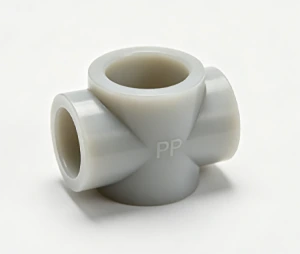
Polypropylene offers low density, good chemical resistance, fatigue resistance, and good processability.
Typical applications include:
- Automotive components
- Living hinges
- Containers
- Household products
- Packaging components
- Industrial parts
PP is particularly useful for products requiring repeated flexing or exposure to many common chemicals.
Polycarbonate (PC)
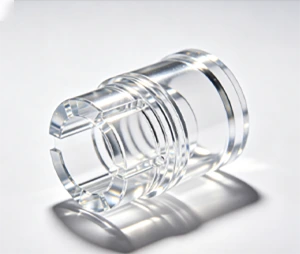
Polycarbonate is known for high impact resistance and good dimensional stability.
It is often used for:
- Protective covers
- Electronic components
- Optical-related components
- Industrial housings
- Safety equipment
For applications requiring transparency or high impact resistance, PC can be an attractive material option.
Nylon (PA)
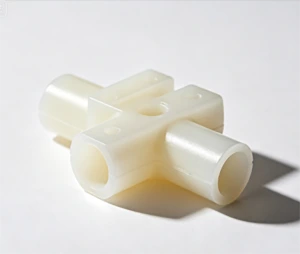
Nylon provides good strength, wear resistance, and mechanical performance.
It is commonly used for:
- Gears
- Bushings
- Mechanical components
- Automotive parts
- Industrial components
Different grades of nylon can provide different levels of strength, temperature resistance, and dimensional stability.
POM
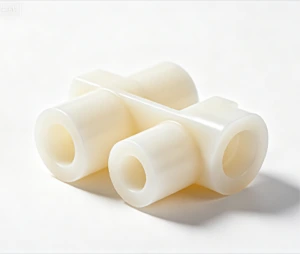
Polyoxymethylene (POM), also known as acetal, is valued for its low friction, good dimensional stability, and wear resistance.
Typical applications include:
- Gears
- Bearings
- Bushings
- Precision mechanical components
- Automotive components
POM is often selected for moving components where low friction and repeatable dimensions are important.
PEEK
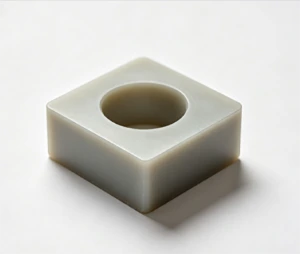
PEEK is a high-performance engineering thermoplastic capable of operating in demanding environments.
It offers excellent mechanical and chemical performance and can be considered for applications requiring high temperature resistance, chemical resistance, or demanding mechanical properties.
Typical applications include specialized:
- Medical components
- Aerospace components
- Industrial equipment
- Semiconductor equipment
- High-performance mechanical parts
TPU and Other Flexible Materials
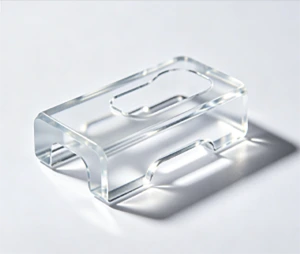
Thermoplastic polyurethane (TPU) and similar elastomeric materials are useful when flexibility, elasticity, impact absorption, or soft-touch characteristics are required.
They are commonly used for:
- Seals
- Protective covers
- Flexible grips
- Consumer products
- Wearable components
How to Choose an Injection Molding Material
Material selection should begin with the functional requirements of the finished product.
Important considerations include:
Mechanical Requirements
Consider tensile strength, impact resistance, stiffness, fatigue resistance, and expected loads.
Temperature Requirements
If the component will operate in high- or low-temperature environments, the material's temperature performance must be evaluated.
Chemical Resistance
Components exposed to oils, fuels, cleaning agents, solvents, or other chemicals may require a material with appropriate chemical resistance.
Dimensional Stability
Some applications require tight dimensional control. Material shrinkage, moisture absorption, and thermal expansion should therefore be considered during material selection.
Appearance
For visible consumer products, factors such as color, gloss, transparency, texture, and surface quality may be critical.
Cost
Material cost can significantly affect the total production cost, particularly for high-volume manufacturing.
Injection Molding Design Considerations
Good part design is critical to successful injection molding. A component that is difficult to mold can lead to defects, longer cycle times, higher tooling costs, and unnecessary manufacturing complexity.
Uniform Wall Thickness
Maintaining relatively consistent wall thickness can help promote uniform material flow and cooling.
Significant variations in wall thickness can contribute to:
- Sink marks
- Warpage
- Voids
- Uneven shrinkage
- Longer cooling times
Where thicker sections are necessary, design features such as ribs and core-outs can often be used to maintain structural strength while reducing excessive material thickness.
Draft Angles
Draft angles allow molded parts to be removed from the mold more easily.
Without sufficient draft, the component may stick to the mold surface, increasing the risk of scratches, deformation, or ejection problems.
The required draft depends on factors such as:
- Material
- Surface texture
- Part geometry
- Mold construction
- Ejection system
Textured surfaces generally require more draft than smooth surfaces.
Ribs
Ribs can improve the stiffness of an injection molded component without requiring a large increase in overall wall thickness.
However, excessively thick ribs can create sink marks on visible surfaces.
A well-designed rib should therefore balance structural reinforcement with manufacturability and appearance.
Bosses
Bosses are frequently used to accommodate screws, inserts, pins, or other fastening elements.
Their geometry should be designed to avoid excessive wall thickness and minimize the risk of sink marks or voids.
Undercuts
Undercuts prevent a straightforward part ejection and may require additional mold mechanisms such as side actions, lifters, or collapsible cores.
Whenever possible, unnecessary undercuts should be avoided because they can increase mold complexity, tooling cost, and maintenance requirements.
Gate Location
Gate placement affects how molten plastic flows through the mold cavity.
An appropriate gate location can help improve:
- Filling balance
- Weld line position
- Packing
- Surface appearance
- Dimensional consistency
Gate design should be considered together with part geometry, material selection, and cosmetic requirements.
Injection Molding Tolerances
Injection molding tolerances define the acceptable dimensional variation of a molded component.
Unlike CNC machining, injection molding involves a material that changes from a molten state to a solid state. As a result, factors such as material shrinkage, cooling conditions, mold temperature, injection pressure, and part geometry can influence final dimensions.
For this reason, not every feature should automatically be assigned extremely tight tolerances.
What Affects Injection Molding Tolerances?
Several factors can influence achievable dimensional accuracy:
- Plastic material
- Material shrinkage
- Part size
- Wall thickness
- Mold design
- Mold temperature
- Injection pressure
- Cooling rate
- Tooling accuracy
- Machine stability
- Part geometry
- Measurement method
Large components and parts with significant changes in wall thickness can be more difficult to control dimensionally than small, relatively uniform parts.
Designing for Practical Tolerances
One of the most important principles of injection molding design is to specify tolerances according to actual functional requirements.
Overly tight tolerances can significantly increase:
- Mold manufacturing costs
- Inspection requirements
- Production complexity
- Scrap risk
- Production cycle time
Instead of applying tight tolerances to every dimension, critical functional features should be identified and controlled more carefully.
For example, interfaces involving shafts, bearings, connectors, seals, or mating components may require tighter control than non-functional cosmetic dimensions.
Injection Molding Surface Finishes
Surface finish is another important design consideration.
Injection molded parts can be produced with different surface appearances depending on the mold cavity finish.
Common options include:
- Glossy finishes
- Matte finishes
- Fine textures
- Heavy textures
- Polished surfaces
- EDM textures
- Custom patterns
Surface texture can affect both appearance and mold release. Textured surfaces generally require appropriate draft angles to prevent damage during ejection.
For consumer products, surface finish can also be an important part of the product's visual identity.
Common Injection Molding Applications
Injection molding is used across a broad range of industries.
Automotive
Automotive manufacturers use injection molding for a wide variety of interior, exterior, electrical, and functional components.
Examples include:
- Interior trim
- Instrument panel components
- Door components
- Clips and fasteners
- Electrical housings
- Sensor housings
- Engine-related components
Materials can be selected according to requirements for heat resistance, impact resistance, chemical exposure, durability, and appearance.
Consumer Products
Injection molding is widely used for mass-produced consumer products.
Applications include:
- Appliance components
- Electronic housings
- Household products
- Packaging
- Toys
- Sporting goods
- Personal care products
The ability to produce complex shapes at high volumes makes injection molding particularly attractive for consumer products.
Medical Devices
Medical and healthcare applications can require stringent material, dimensional, cleanliness, and quality requirements.
Injection molding can be used for products and components such as:
- Medical housings
- Disposable components
- Laboratory components
- Device components
- Surgical accessories
Material selection and production controls should be based on the specific medical application and applicable requirements.
Electronics
Plastic injection molding is widely used to manufacture protective housings and functional components for electronic products.
Typical examples include:
- Device housings
- Connector components
- Switches
- Cable management components
- Sensor housings
- Internal structural components
Industrial Equipment
Industrial products often require durable plastic components that can withstand mechanical loads, chemicals, heat, or continuous operation.
Applications may include:
- Equipment housings
- Gears
- Covers
- Handles
- Mounting components
- Mechanical parts
Robotics
Robotics manufacturers use injection molded components when they require repeatable, lightweight, and scalable production.
Applications can include:
- Robot covers
- Sensor housings
- Cable management components
- Structural covers
- End-effector components
- Consumer robotics housings
Injection Molding Processes and Related Technologies
Injection molding can be adapted to meet different product requirements.
Insert Molding
Insert molding combines plastic with pre-formed components such as metal inserts.
This can reduce assembly operations and integrate mechanical features directly into the molded component.
Common applications include:
- Threaded inserts
- Electrical contacts
- Bushings
- Reinforcement components
Overmolding
Overmolding involves molding one material over another component or substrate.
For example, a rigid plastic substrate can be combined with a softer elastomer to create a component with both structural support and a comfortable grip.
Typical applications include:
- Handles
- Grips
- Seals
- Consumer products
- Medical components
- Electronic devices
Two-Shot Injection Molding
Two-shot molding allows two different materials or colors to be molded into a single component within a specialized production process.
It can be used to create:
- Multi-color components
- Soft-touch products
- Integrated functional features
- Multi-material components
How to Reduce Injection Molding Costs
Injection molding tooling represents a significant upfront investment, so design decisions can have a major impact on total production cost.
Several strategies can help control costs.
Simplify Mold Geometry
Avoid unnecessary slides, lifters, complex cores, and undercuts where possible.
Design for Manufacturability
Review the component with the injection molding process in mind before tooling begins.
Select the Right Material
Use a material that meets the functional requirements without unnecessarily selecting a more expensive engineering polymer.
Optimize Wall Thickness
Consistent and appropriate wall thickness can help reduce material consumption and improve molding efficiency.
Consider Production Volume
Injection molding becomes increasingly attractive as production volume increases because the tooling cost can be distributed across a larger number of parts.
What Is DFM for Injection Molding?
Design for Manufacturing (DFM) is the process of reviewing a product design before production to identify potential manufacturing problems.
An injection molding DFM review may evaluate:
- Wall thickness
- Draft angles
- Ribs
- Bosses
- Undercuts
- Parting lines
- Gate locations
- Ejection
- Mold complexity
- Material selection
- Tolerances
- Surface finish
A DFM review performed before mold manufacturing can help identify issues when they are still relatively easy and inexpensive to correct.
How to Choose an Injection Molding Manufacturer
Choosing the right injection molding supplier involves more than comparing unit prices.
Important factors include:
Manufacturing Capabilities
Check the available injection molding machines, clamping forces, shot capacities, tooling capabilities, and production capacity.
Material Experience
Make sure the supplier has experience processing the specific plastic material required for your application.
Tooling Capability
A supplier with strong mold design and tooling capabilities can often identify manufacturing risks earlier in the development process.
Quality Control
Ask about dimensional inspection, process control, first article inspection, material traceability, and quality documentation where required.
Engineering Support
A capable supplier should be able to provide DFM feedback and recommend changes that improve manufacturability without compromising the product's functional requirements.
Production Scalability
If your project is expected to grow from prototypes to mass production, choose a supplier capable of supporting the expected production volume.
Custom Injection Molding Services at QSY
QSY provides custom plastic injection molding services for prototypes, low-volume production, and production applications.
Our injection molding solutions can support a range of engineering thermoplastics and production requirements. Depending on the project, additional services such as insert molding, overmolding, tooling, surface finishing, assembly, and quality inspection can also be incorporated into the manufacturing process.
Our engineering team can review your 3D CAD files and technical drawings to evaluate:
- Material selection
- Wall thickness
- Draft angles
- Ribs and bosses
- Undercuts
- Parting lines
- Gate locations
- Ejection requirements
- Critical tolerances
- Surface finish
- Mold complexity
This design-for-manufacturing approach helps identify potential issues before tooling begins and can reduce unnecessary tooling modifications during production.
Whether you need a small batch of prototype parts or a high-volume production program, the appropriate combination of material, mold design, manufacturing process, and quality control is essential for achieving consistent results.
Injection molding is a versatile and scalable manufacturing process capable of producing everything from simple plastic components to highly complex engineered parts.
However, successful injection molding depends on decisions made long before the first part is produced. Material selection, part geometry, wall thickness, draft angles, gate placement, mold design, tolerances, and surface finish all influence the final product.
By applying injection molding design principles and considering manufacturability from the beginning, manufacturers can improve part quality, reduce tooling risks, control production costs, and achieve more consistent results.
Whether the application is automotive, medical, electronics, robotics, industrial equipment, or consumer products, selecting an experienced injection molding partner can help turn a product concept into a reliable production component.
If you have a plastic component that requires injection molding, provide your 3D CAD model, drawings, material requirements, expected production volume, and tolerance specifications for a manufacturing review and quotation.